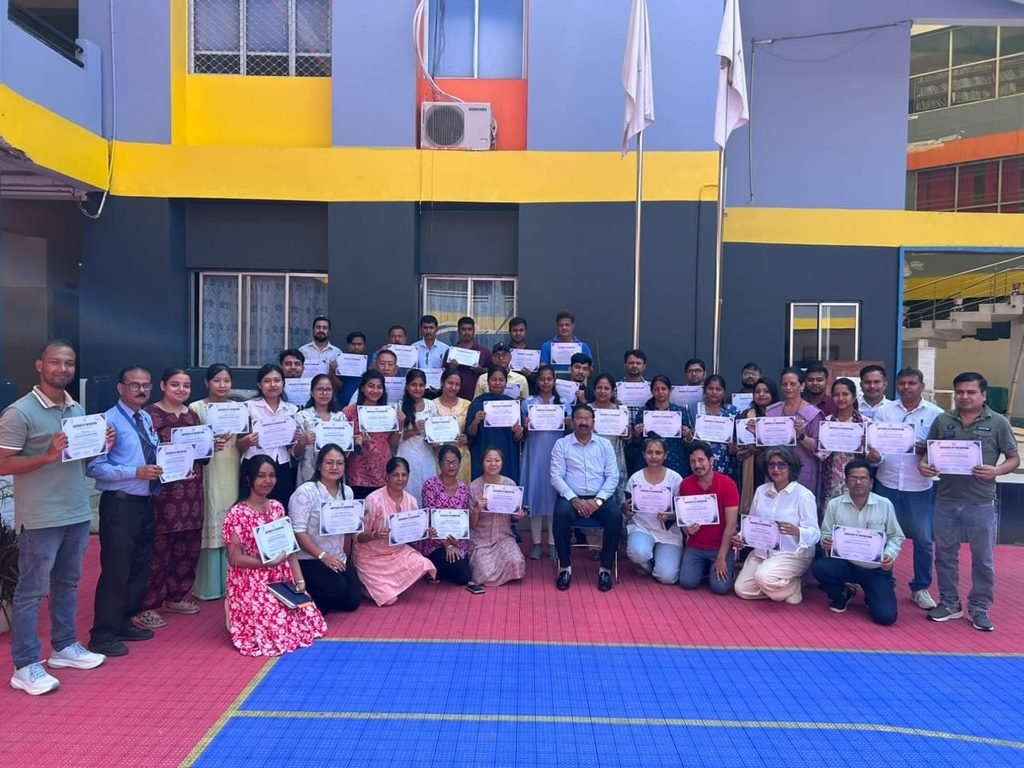
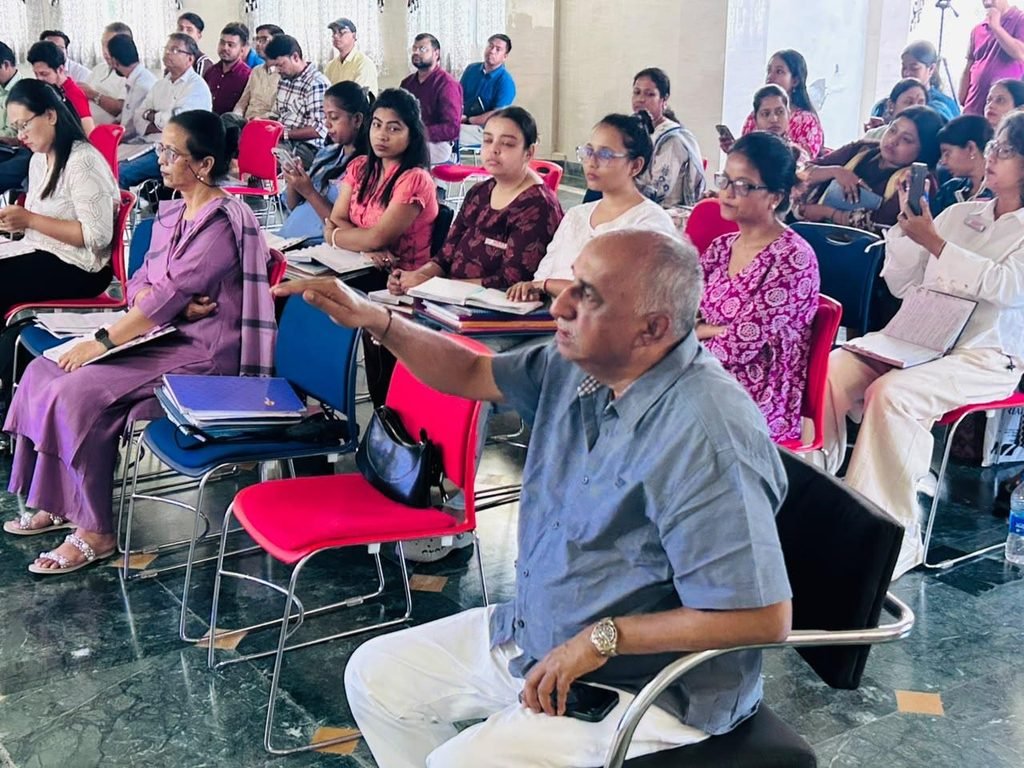


OFFLINE TRAINING STRATEGIES
Training Unit – CED Foundation
Empowering Schools in India and Abroad
Centre for Educational Development (CED) Foundation, Noida, India
The Training Unit of CED Foundation is committed to strengthening the professional competencies of school leaders, principals, teachers, academic coordinators, and educational administrators through structured, need-based offline training programmes.
In alignment with the vision of NEP 2020, the National Curriculum Framework, competency-based education, and emerging global educational practices, CED Foundation aims to establish meaningful partnerships with schools across India and abroad to promote continuous professional development and educational excellence.
- Key Objectives
- Enhance the leadership and administrative competencies of school principals and management teams.
- Strengthen teachers’ pedagogical skills and classroom effectiveness.
- Promote competency-based teaching, learning, and assessment.
- Integrate Artificial Intelligence, digital tools, and innovative teaching strategies into education.
- Develop effective school improvement plans and academic monitoring systems.
- Encourage experiential learning, collaborative practices, and international educational perspectives.
- Build a sustainable network of schools committed to continuous professional development.
- Major Offline Training Strategies
A. School-Based Training Programmes
CED Foundation will organise customised training sessions directly on school campuses according to the requirements identified by the school management.
Focus areas:
- Effective classroom management
- Lesson planning and annual pedagogical planning
- NEP 2020 implementation and competency-based learning
- Assessment design, question-paper development, and result analysis
- Classroom observation and constructive feedback
- Student engagement and inclusive education
- Technology integration and AI-supported teaching
B. Leadership Development Programmes
Specialised workshops will be designed for principals, vice-principals, heads of departments, coordinators, and school management representatives.
Focus areas:
- Instructional leadership and academic supervision
- School vision, mission, and strategic planning
- Teacher performance monitoring and mentoring
- Institutional accountability and team management
- Parent engagement and effective communication
- School branding, admissions, and institutional development
- Data-driven decision-making and school improvement
C. Subject-Specific Teacher Training
CED Foundation will facilitate subject-wise training programmes to help educators adopt innovative teaching methodologies and improve student learning outcomes.
Training may cover English, Mathematics, Science, Social Science, Languages, Computer Science, STEM, Artificial Intelligence, and other emerging areas.
D. Assessment and Competency-Based Education
Training sessions will focus on developing educators’ understanding of learning outcomes, competency-based questions, formative assessment, analytical thinking, and the effective use of assessment data.
Schools may also be guided in identifying learning gaps and preparing remedial and enrichment plans.
E. AI and Digital Education Workshops
Practical workshops will introduce educators to responsible and effective applications of AI and digital technologies in education.
Sessions may include:
- AI-assisted lesson planning
- Digital teaching resources and presentations
- Question-bank and worksheet development
- Personalised learning strategies
- Assessment analysis and academic reporting
- Responsible, ethical, and safe use of AI
F. Student Development and Career Readiness
CED Foundation may also conduct student-focused programmes on communication skills, critical thinking, problem-solving, career awareness, leadership, life skills, and future-ready competencies.
G. International Exposure and Knowledge Exchange
For schools abroad and institutions seeking international collaboration, CED Foundation may facilitate educator exchanges.
- School Partnership and Outreach Strategy
The Training Unit will adopt a structured outreach approach to develop partnerships with schools across India and abroad.
School identification: Prepare a database of CBSE, ICSE, state-board, and international schools.
Institutional communication: Send formal proposals to school managements, principals, and academic heads.
Training needs assessment: Conduct discussions or surveys to identify institutional priorities.
Customised proposal: Develop a training plan with objectives, modules, duration, trainers, and expected outcomes.
Confirmation and coordination: Finalise dates, venue, participants, resource persons, and logistics.
Programme delivery: Conduct interactive, activity-based, and practice-oriented training.
Feedback and evaluation: Collect participant feedback and assess learning outcomes.
Follow-up mentoring: Offer post-training support, implementation reviews, and further development opportunities.